THC Detection Times, Factors, and Drug Test Breakdown
Understanding how long weed stays in your system is one of the most searched cannabis-related questions online. Whether you are preparing for a drug test, managing responsible use, or simply curious about cannabis metabolism, the answer depends on several key factors.
This guide explains how THC is processed, how long it can be detected, and what influences detection times, using clear, evidence-based information.
What Stays in Your System: THC vs. THC-COOH
When you consume cannabis, your body processes THC (tetrahydrocannabinol) into metabolites. The primary metabolite tested for is THC-COOH, which is fat-soluble and remains in the body longer than THC itself.
Because THC-COOH binds to fat cells, it leaves the body gradually. As a result, detection times vary widely from person to person.
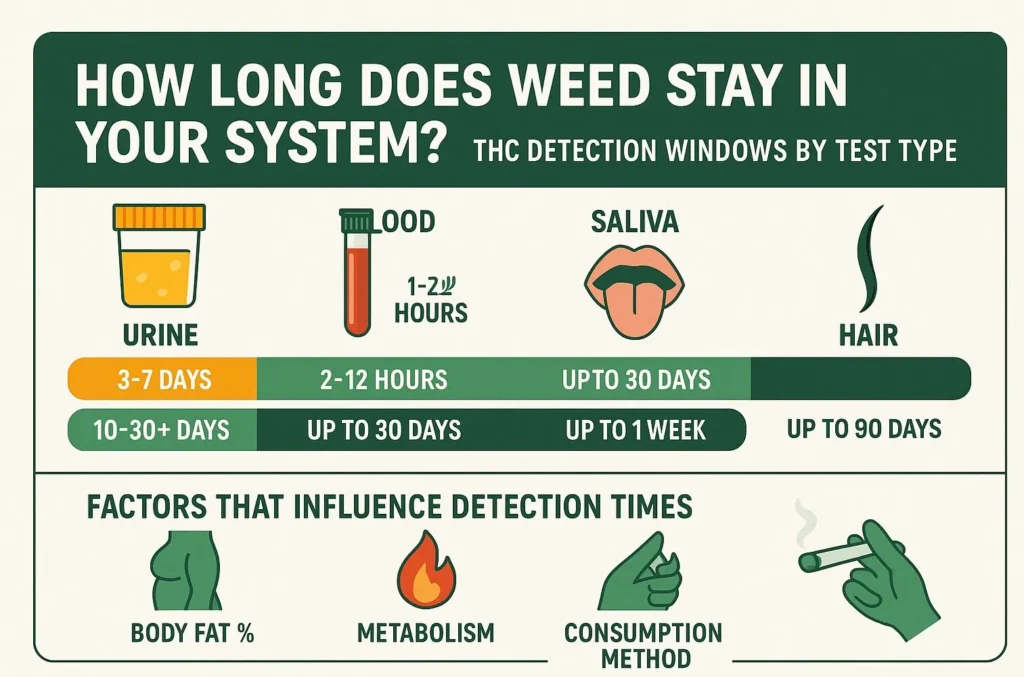
Average Detection Times by Drug Test Type
Different drug tests detect THC metabolites for different lengths of time. Therefore, the test method matters as much as usage frequency.
Urine Test (Most Common)
- Single use: 3 days
- Moderate use (2–4x/week): 7–10 days
- Daily use: 10–15 days
- Heavy chronic use: 30+ days
Urine testing remains the standard for workplace and probation screenings.
Blood Test
- Occasional use: 1–2 days
- Frequent use: Up to 7 days
Blood tests detect active THC rather than metabolites. Consequently, they are more common in DUI investigations than employment testing.
Saliva Test
- Occasional use: 24–48 hours
- Frequent use: Up to 72 hours
Saliva tests detect recent use and are often used in roadside testing.
Hair Follicle Test
- Detection window: Up to 90 days
Hair tests have the longest detection window. However, they are less common due to cost and lower accuracy for infrequent users.
Key Factors That Affect How Long Weed Stays in Your System
Several variables influence THC detection time. Therefore, no single timeline applies to everyone.
1. Frequency of Use
The more often you use cannabis, the longer THC metabolites accumulate in fat cells.
2. THC Potency
High-THC strains, concentrates, dabs, and edibles increase metabolite buildup.
3. Body Fat Percentage
Because THC is fat-soluble, individuals with higher body fat may retain metabolites longer.
4. Metabolism Speed
Faster metabolisms typically eliminate THC more quickly.
5. Method of Consumption
- Smoking/vaping: Faster onset, shorter duration
- Edibles: Slower onset, longer metabolite presence
How Long Does Weed Stay in Your Body After One Use?
For most people, a single cannabis session clears within 72 hours. However, trace metabolites may remain longer depending on metabolism and dosage.
Occasional users generally test negative sooner than regular users.
Can You Detox Faster?
There is no guaranteed way to instantly remove THC from your system. Despite marketing claims, detox products do not reliably alter lab results.
That said, the body naturally eliminates THC over time. Supporting general health may help normal metabolic function:
- Stay hydrated
- Maintain regular physical activity
- Eat a balanced diet
- Allow sufficient time before testing
Ultimately, time is the only proven factor.
Weed Detection vs. Impairment
It is important to understand that detection does not equal impairment. THC metabolites can remain in the body long after psychoactive effects have ended.
In other words, a positive test does not indicate current intoxication.
Frequently Asked Questions (FAQ)
How long does weed stay in your system for a drug test?
Most urine tests detect THC for 3–30 days, depending on usage frequency.
Does CBD show up on a drug test?
Pure CBD does not. However, full-spectrum products containing trace THC may result in a positive test.
Do edibles stay longer in your system than smoking?
Yes. Edibles often produce longer-lasting metabolites due to liver metabolism.
Final Thoughts
So, how long does weed stay in your system? The answer depends on frequency, potency, body composition, metabolism, and test type. While occasional users may clear THC in a few days, regular users may require several weeks.
Understanding these factors helps you make informed decisions about cannabis use and testing expectations.